
Through fun, hands-on activities, children can begin to recognize patterns, distinguish differences between shapes, and understand spatial relationships, all while developing their logical reasoning abilities. Furthermore, the rhombus, with its unique shape, arouses curiosity.
Promoting creativity: Thanks to its symmetry and properties, children can use the rhombus to create patterns and artistic compositions, developing their creativity.
Development of spatial awareness: Through activities with rhombuses, children develop a greater understanding of how figures are organized in space. This knowledge helps them understand concepts such as symmetry, orientation, and spatial relationships.
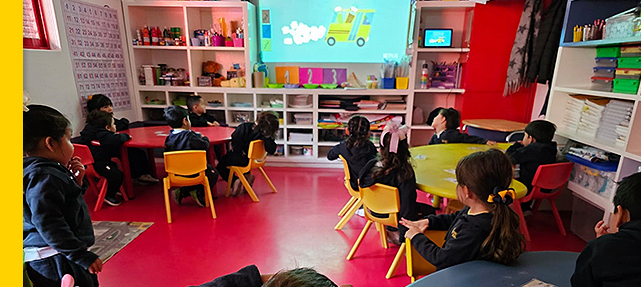
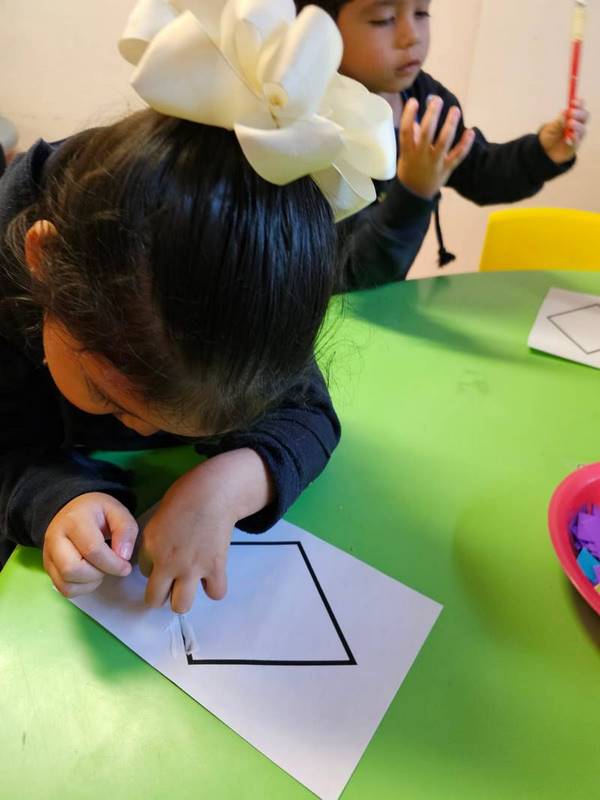
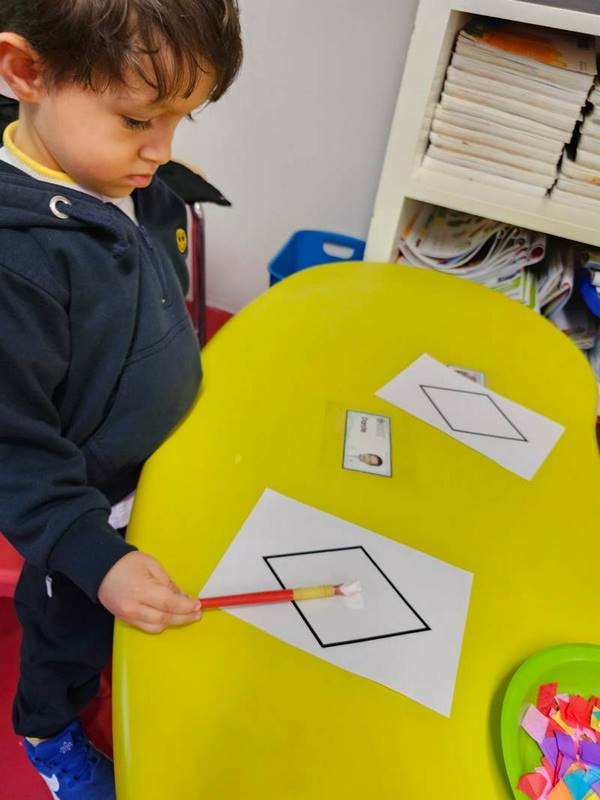
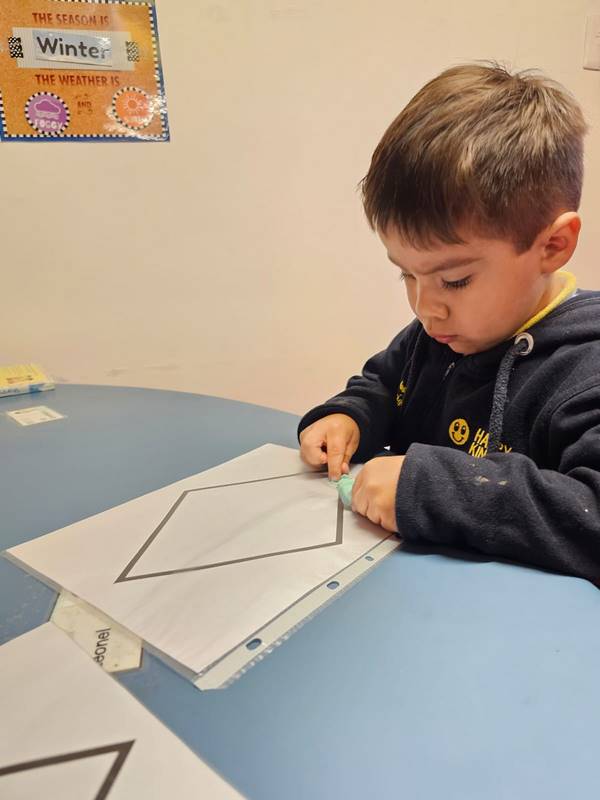
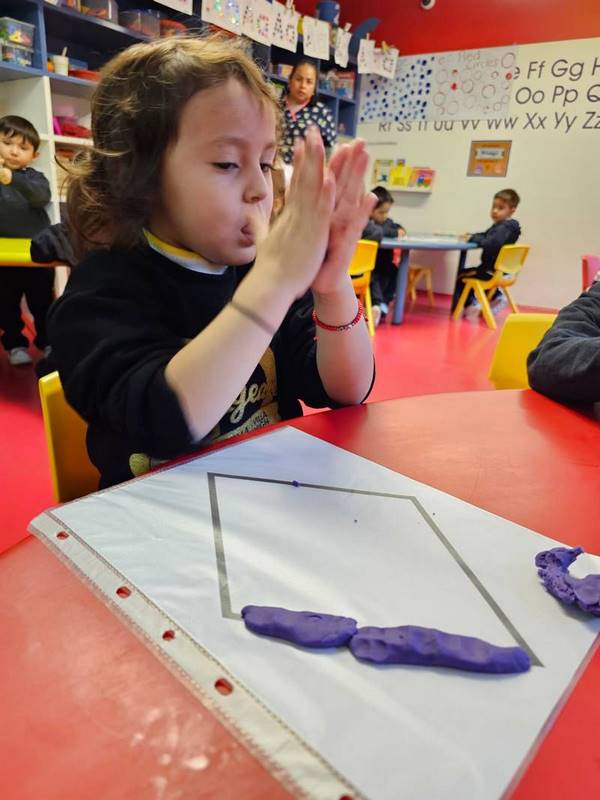
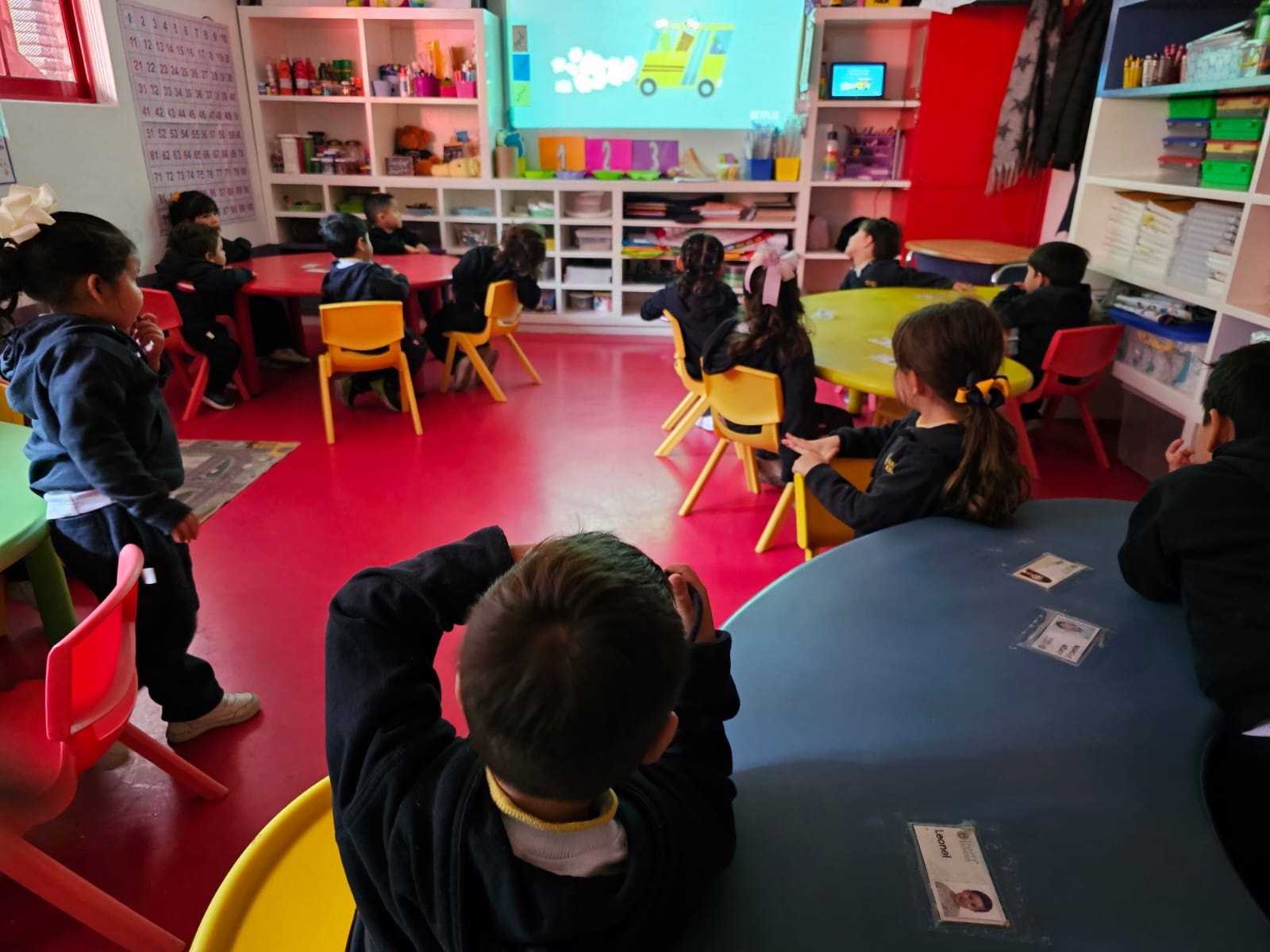
On this occasion, the students first watched a video about the rhombus, then we traced the rhombus on a mural and modeled the rhombus with plasticine. At the end, they made a rhombus and turned it into a kite. All the students joined in the activity and showed interest in learning about this new figure. They said that it was a diamond, and on their own they began to give their points of view of this shape.








Conociendo al rombo desde un mundo de actividades distintas
A través de actividades prácticas y divertidas, los niños pueden comenzar a reconocer patrones, distinguir diferencias entre figuras y comprender relaciones espaciales, todo mientras desarrollan su capacidad de razonamiento lógico. Además, el rombo, con su forma única, despierta curiosidad.
Fomento de la creatividad: Gracias a su simetría y propiedades, los niños pueden usar el rombo para crear patrones y composiciones artísticas desarrollando su creatividad.
Desarrollo de la conciencia espacial: A través de actividades con rombos, los niños desarrollan una mayor comprensión de cómo se organizan las figuras en el espacio. Este conocimiento les ayuda a comprender conceptos como simetría, orientación y relaciones espaciales.
En esta ocasión los alumnos primero observaron un video sobre el rombo; posteriormente trazamos el rombo de manera mural y lo modelamos con plastilina para convertirlo en un papalote. Todos los alumnos se integraron en la actividad y mostraron interés por conocer esta nueva figura. Ellos mismos dijeron que era un diamante y comenzaron a dar sus puntos de vista sobre esta figura.
“What the hand does, the mind remembers.”
-María Montessori
“Lo que la mano hace, la mente lo recuerda”.
Frida Yescas
K1B English Teacher