
Kids use numbers and math every day at school, at home, while playing, and in their daily routines. Teaching them in their early years through play and by using materials is one of the most important ways to help them develop their mathematical skills.
These skills go beyond numbers; they are part of a process that begins with using logic and developing abstract thinking. These skills help children to solve problems in creative ways and think logically by using their curiosity, giving them the opportunity to answer simple questions like “how” and “why” on their own.
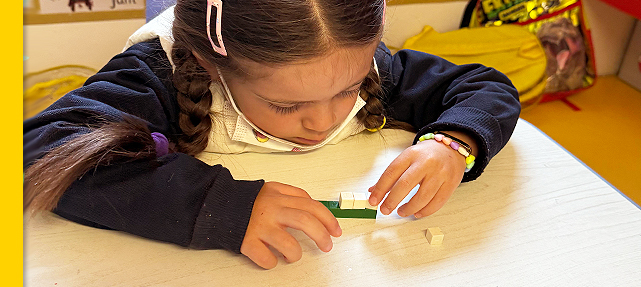
For this activity kids use Cuisenaire rods to learn about numbers. Each rod has a color that matches its value, which makes it easier for children to understand numbers from abstract ideas to real objects. First, the children looked at the rods and compared their sizes to see which ones were bigger and which ones were smaller in value. After that, they explored how many white rods, which have the value of 1, could fit into the largest rod, which has the value of 10. This activity helped them see numbers, compare values, and understand counting in a fun way by using their hands.
These materials also provide other benefits, such as developing number sense, improving visualization, recognizing patterns, and learning about geometry and length.




Desarrollando la mente matemática a través del juego
Los niños usan números y matemáticas todos los días: en la escuela, en casa, mientras juegan y en sus rutinas diarias. Enseñarles en los primeros años a través del juego y utilizando materiales es una de las formas más importantes de ayudarles a desarrollar sus habilidades matemáticas.
Estas habilidades van más allá de los números; forman parte de un proceso que comienza con el uso de la lógica y el desarrollo del pensamiento abstracto. Estas habilidades ayudan a los niños a resolver problemas de manera creativa y a pensar de forma lógica usando su curiosidad, dándoles la oportunidad de responder por sí mismos a preguntas simples como “cómo” y “por qué”.
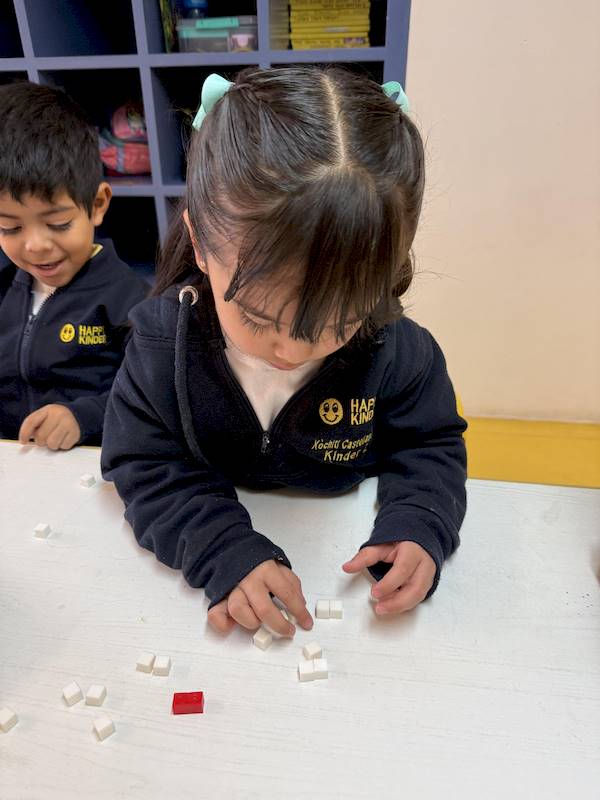
Para esta actividad, los niños utilizaron regletas para aprender sobre los números. Cada regleta tiene un color que corresponde a su valor, lo que facilita a los niños comprender los números, pasando ideas abstractas a objetos concretos. Primero, los niños observaron las regletas y compararon sus tamaños para ver cuáles eran más grandes y cuáles más pequeñas en valor. Después, exploraron cuántas regletas blancas, que tienen el valor de 1, cabían en la regleta más grande, que tiene el valor de 10. Esta actividad les ayudó a ver los números, comparar valores y entender la numeración de manera divertida y usando sus manos.
Estos materiales también ofrecen otros beneficios, como desarrollar el sentido numérico, mejorar la visualización, reconocer patrones y aprender sobre geometría y longitud.
Pame Luna
K2B English Teacher