

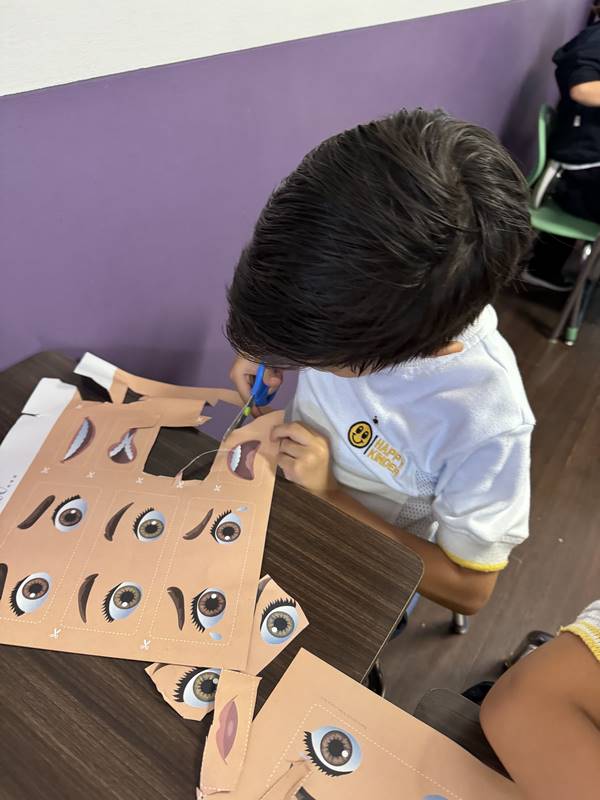
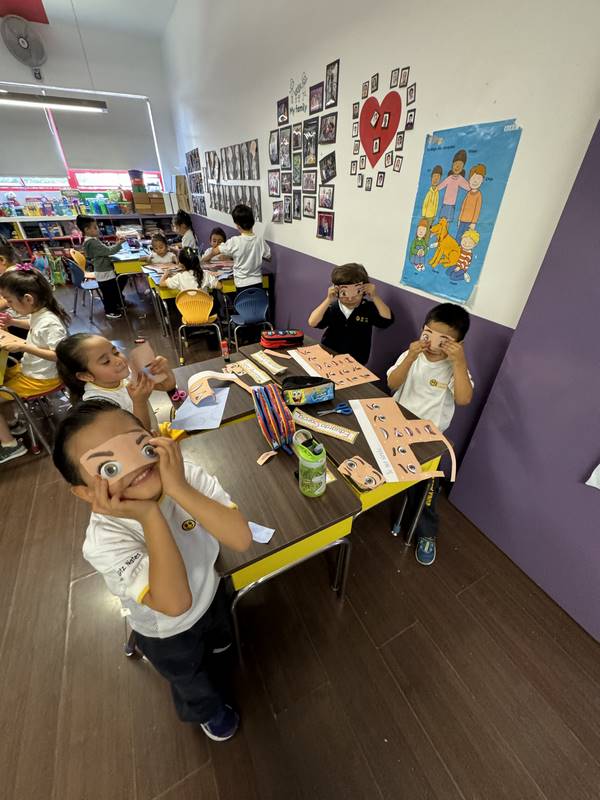
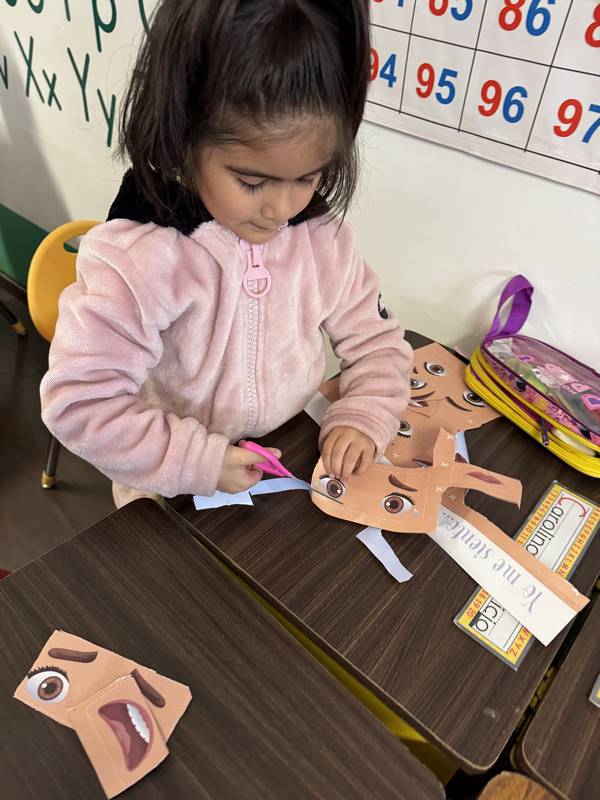
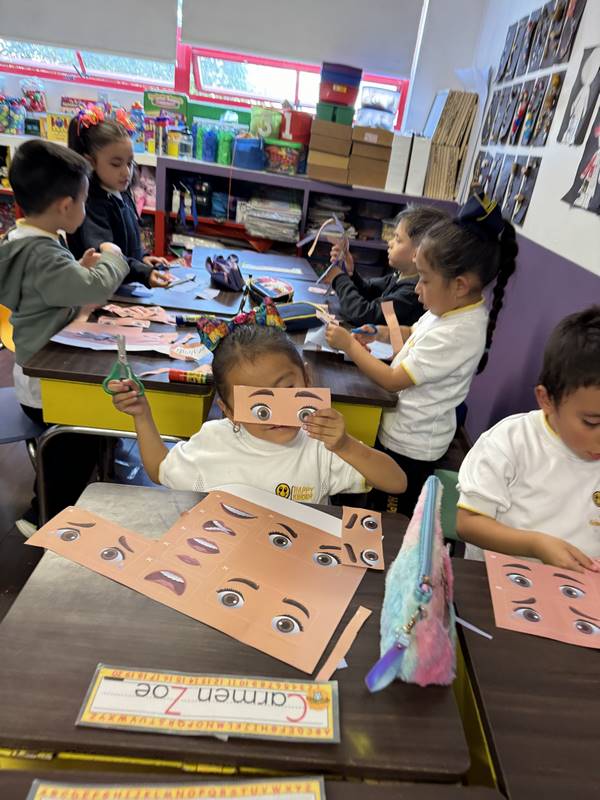
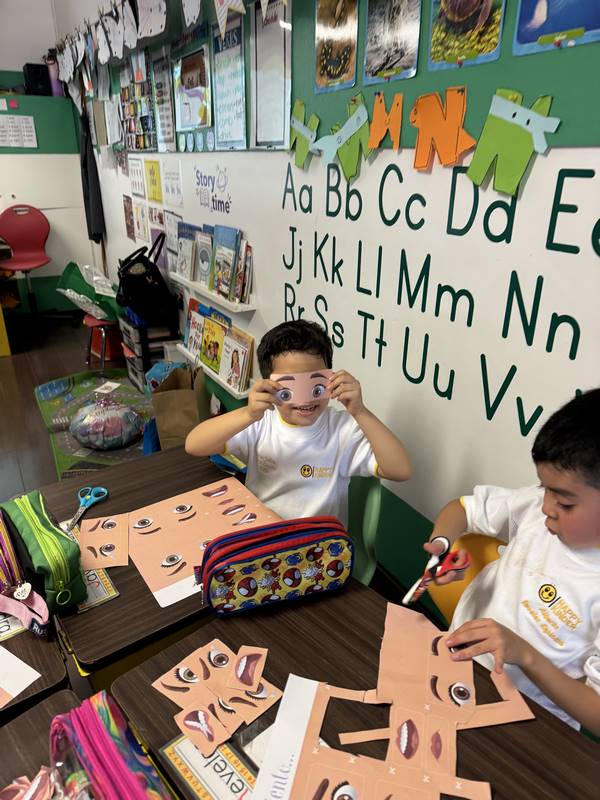
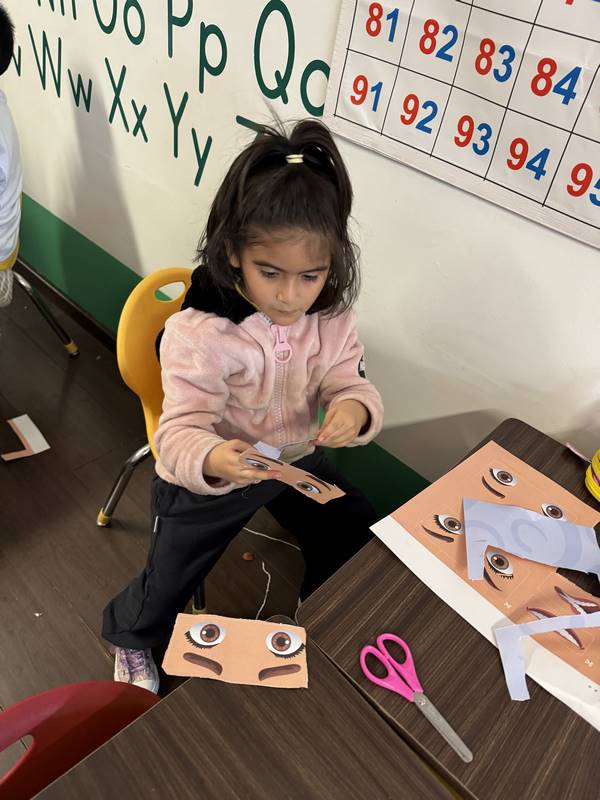
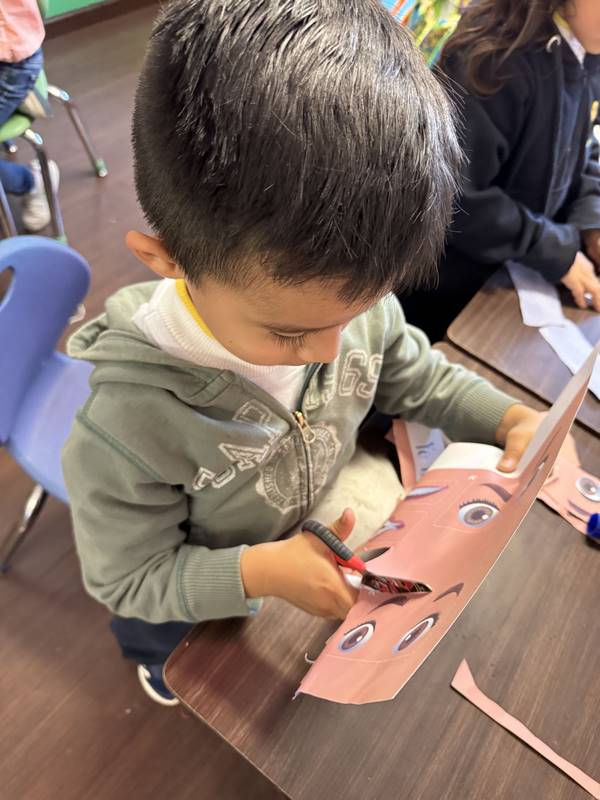
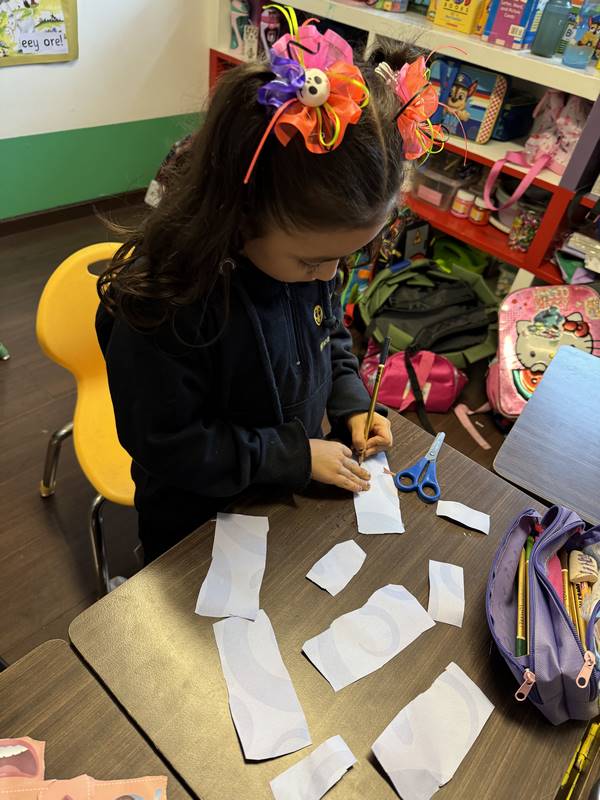
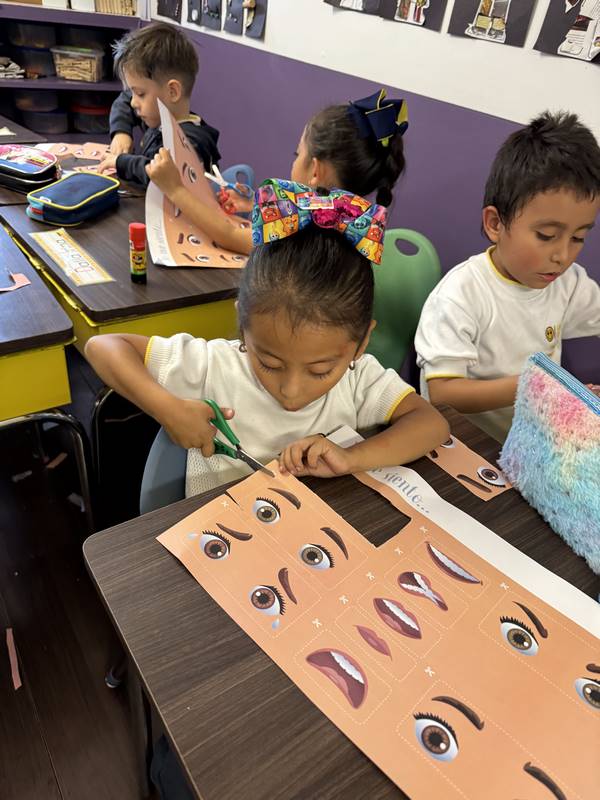
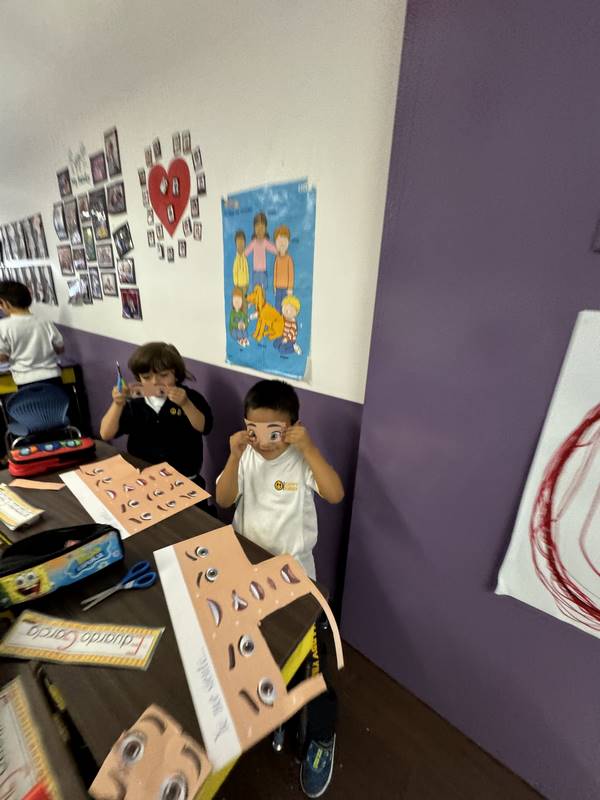
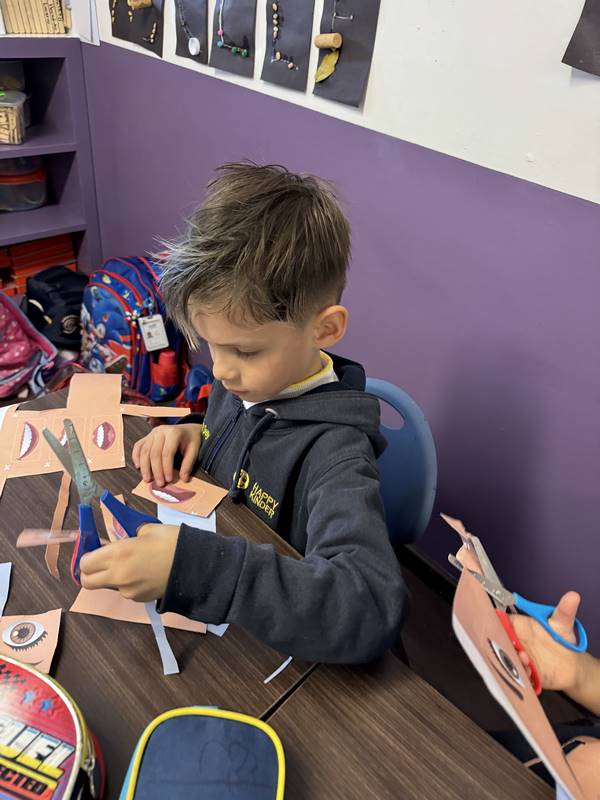
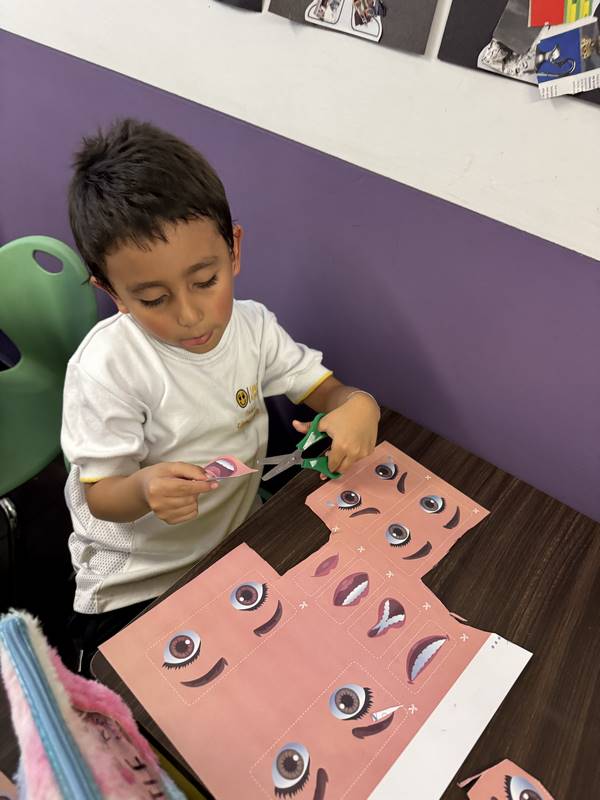
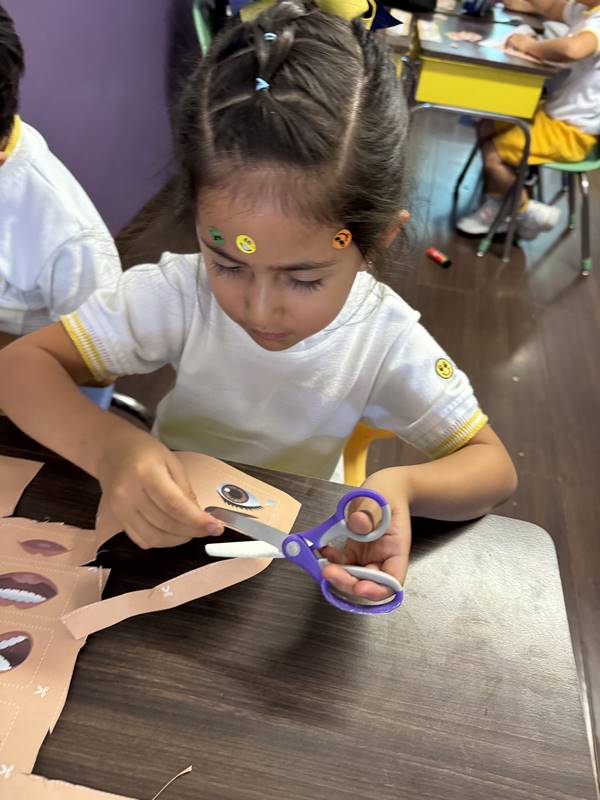
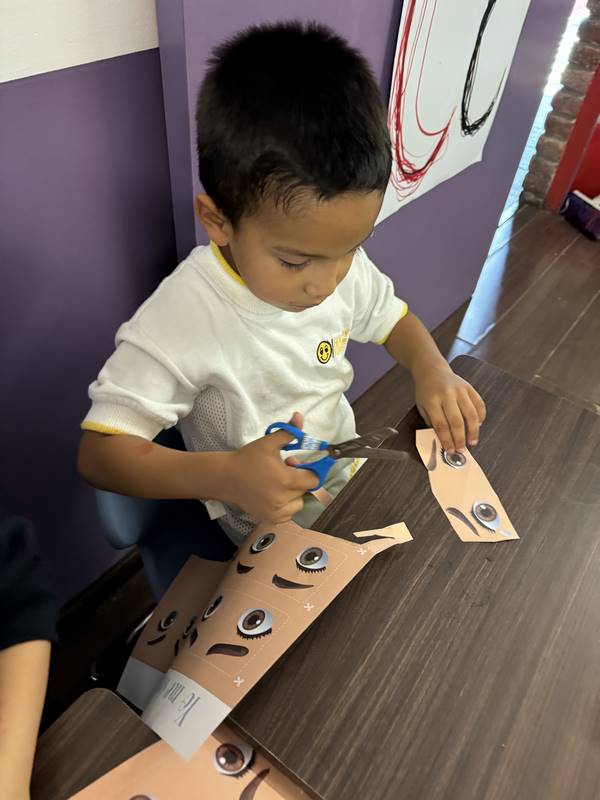
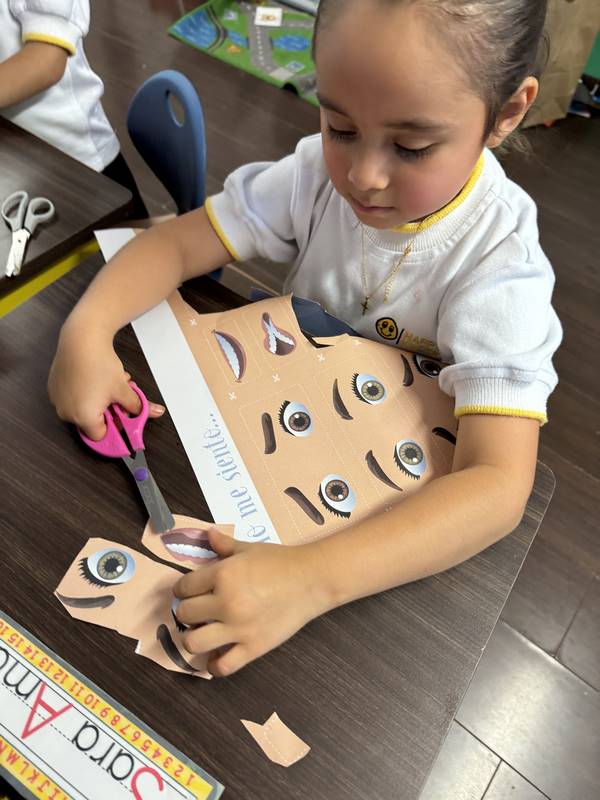
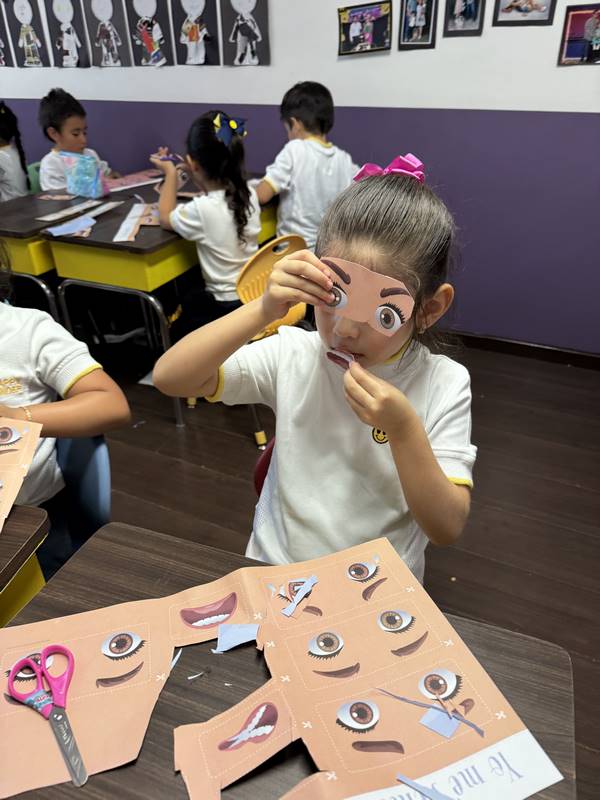
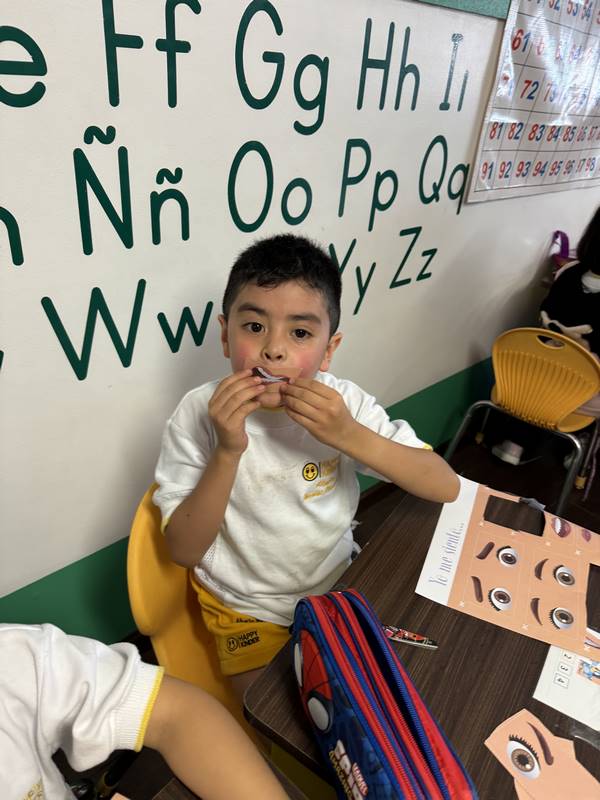
In our K3 group, the children had a fun and educational experience exploring the world of emotions. Through a creative activity, they learned to identify and represent different emotions using cutouts of facial features. The purpose of the activity was to help them visualize how our facial expressions reflect how we feel and, from there, reflect on what to do when we experience different emotions.
The children received cutouts of eyes, mouths, and eyebrows, and with these materials, they created various expressions representing emotions such as happiness, sadness, anger, fear, and surprise. By observing their creations. After completing the activity, we discussed what to do when we feel strong emotions. The children shared ideas on how they can manage sadness, anger, or happiness, learning that taking a deep breath, talking to a friend, or asking for help are healthy ways to react.
This activity not only helped the children identify their emotions but also raised awareness about how our emotions affect our interactions with others. The goal was to foster empathy, self-understanding, and the importance of expressing what we feel in a healthy way to avoid misunderstandings and conflicts with peers.
We invite families to continue this learning at home, helping children identify and manage their emotions positively. Teaching them to recognize what they feel and how to react respectfully with others is key to the emotional and social development of our little ones.
Together, we can help them grow in an environment where emotional understanding is the foundation of their well-being.
Book Recommendation: “El cazo de Lorenzo”



Creando caras con emociones
En Kinder 3, los niños vivieron una experiencia divertida y educativa al explorar el mundo de las emociones. A través de una actividad creativa, aprendieron a identificar y representar distintas emociones utilizando recortes de partes de la cara. La finalidad de la actividad fue ayudarles a visualizar cómo nuestras expresiones faciales reflejan lo que sentimos y, a partir de ahí, reflexionar sobre qué hacer cuando experimentamos diferentes emociones.
Los alumnos realizaron recortes de ojos, bocas y cejas, y con estos materiales crearon diversas expresiones que representan emociones como alegría, tristeza, enojo, miedo y sorpresa. Al observar sus propias creaciones, los pequeños comenzaron a entender cómo una cara puede mostrar diferentes sentimientos. Después de realizar la actividad, platicamos sobre qué hacer cuando sentimos emociones fuertes. Los niños compartieron ideas sobre cómo pueden manejar la tristeza, la ira o la felicidad, aprendiendo que tomar un respiro profundo, hablar con un amigo o pedir ayuda, son maneras saludables de reaccionar.
Esta actividad no solo ayudó a los niños a identificar sus emociones, sino también a tomar conciencia de cómo nuestras emociones afectan nuestras interacciones con los demás. El objetivo fue fomentar la empatía, la autocomprensión y la importancia de expresar lo que sentimos de manera adecuada para evitar malentendidos y conflictos con sus compañeros.
Invitamos a las familias a continuar este aprendizaje en casa, ayudando a los niños a identificar y gestionar sus emociones de manera positiva. Enseñarles a reconocer lo que sienten y a cómo reaccionar de manera respetuosa con los demás, es clave para el desarrollo emocional y social de nuestros pequeños.
Juntos, podemos ayudarles a crecer en un entorno donde la comprensión emocional sea el pilar de su bienestar.
Recomendación: “El cazo de Lorenzo”
«Emotions are like the wind: sometimes they push us and other times they guide us.»
-Daniel Goleman
«Las emociones son como el viento: a veces nos empujan y otras veces nos guían.»
Yustine Sandoval
K3B English Teacher